

When it comes to lash lifting, achieving beautiful results is about more than creating the perfect curl. Understanding lash health, processing times and correct product placement is essential to delivering consistent results while protecting the integrity of the natural lashes.
But what happens when a lash lift doesn’t go quite to plan?
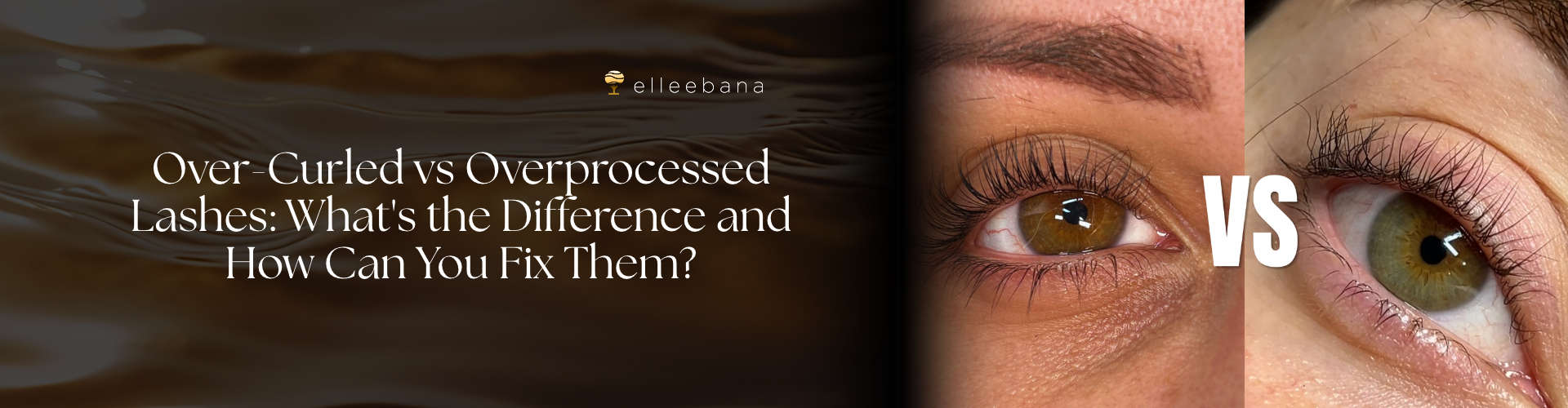
Two of the most common concerns lash artists encounter are over-curled lashes and overprocessed lashes. While they can sometimes look similar, they are not the same thing, and understanding the difference is key to choosing the right corrective treatment.
The good news? With the right knowledge, professional products and careful assessment, there are ways to improve the appearance of an unsuccessful lash lift.
What Are Over-Curled Lashes?
Over-curling occurs when the natural lashes have been lifted into an excessively curved position, rather than achieving a smooth, flattering lift from the base.
Unlike overprocessing, over-curling does not necessarily mean the hair itself has been chemically damaged.
Over-curled lashes typically have a very prominent curl towards the mid-lengths or tips, sometimes forming a tight C-shaped curve. In more extreme cases, the tips may curl backwards towards the eyelid, making the lashes appear shorter than they actually are.
What causes over-curling?
There are a few common reasons a lash lift may result in an excessive curl:
- Incorrect shield selection: Choosing a shield that is too small or has an unsuitable curvature for the client’s natural lash length can cause the lashes to wrap too far around the shield.
- Incorrect lotion placement: Applying lifting lotion too high along the lash shaft can cause the tips to curl excessively instead of creating the desired lift from the base.
- Lash placement: Incorrect wrapping, uneven tension or poor lash separation can also contribute to an irregular result.
It’s important to understand that lotion placement recommendations vary depending on the chemical system being used.
For example, when using a TGA (thioglycolic acid or thioglycolate-based) system such as Elleebana One Shot, lifting lotion should generally be applied approximately 1 mm away from the lash line and up to three-quarters of the lash length, avoiding the tips.
However, when using a gentler cysteamine hydrochloride (CHC) system such as Elleeplex Profusion, lotion can be applied from the base towards the tips when the technique requires it.
This is one reason cysteamine-based systems are particularly suitable for modern Korean lash lifting techniques, where full-length product application may be necessary. Correct processing times and lash assessment are still essential.
What Are Overprocessed Lashes?
Overprocessing is different because it involves the condition and structural integrity of the natural lash.
During a lash lift, the first lotion works by reducing disulfide bonds within the hair, allowing the lash to soften and be reshaped. The second lotion then oxidises the hair, helping to reform those bonds and set the lashes into their new position.
However, when the lifting lotion is left on for too long, or the processing time is too strong for the individual lash type, more bonds may be disrupted than necessary.
This can weaken the internal structure of the hair, reduce elasticity and leave the lashes more susceptible to dryness and breakage.
What do overprocessed lashes look like?
Unlike over-curled lashes, which generally maintain a defined curl, overprocessed lashes can appear:
- Dry, frizzy or unusually coarse in texture.
- Crimped, kinked or twisted in different directions.
- Brittle, fragile or prone to splitting and breakage.
- Uneven, with some lashes appearing excessively curled while others lose their shape.
- Difficult to separate, brush or style into a uniform direction.
One important detail is that signs of overprocessing may not always be immediately visible. In some cases, the lashes may initially appear acceptable, with dryness, frizz or breakage becoming more noticeable in the following hours or days.
Elleebana’s educational guidance highlights the importance of assessing each client’s lash strength, texture and resistance rather than relying on one standard processing time for every treatment.
Can Over-Curled or Overprocessed Lashes Be Fixed?
In some cases, yes! However, the approach depends on the condition of the lashes.
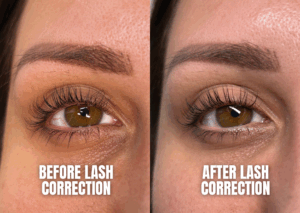
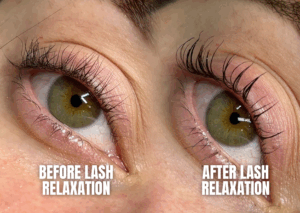
If the lashes are simply over-curled but remain healthy and strong, a professional lash relaxation treatment can help soften the excessive curl and encourage the lashes into a straighter, more natural position.
For this technique, we recommend Elleeplex Profusion Lash and Brow Lamination System.
Elleeplex Profusion uses cysteamine HCl rather than thioglycolate, allowing for more controlled, gentle processing. This makes it a preferred option for corrective work when the natural lashes are suitable for further treatment.
However, if the lashes are significantly overprocessed, extremely dry, brittle or showing signs of breakage, further chemical processing may cause additional damage.
In these cases, the priority should be conditioning, hydration and allowing healthy new lashes to grow through. We recommend performing a conditioning treatment with Elleeplex Regen and have the client apply an aftercare serum, such Elleeplex Hyaluronic Boost or Advanced Aftercare daily to help recondition the lashes.
How to Perform a Lash Relax with Elleeplex Profusion
A lash relax is a corrective treatment designed to reduce an excessive curl without performing another traditional lash lift.
The technique involves carefully softening the existing curl and guiding the lashes into a more relaxed position.
Step 1: Assess the natural lashes
Before beginning, carefully examine the lashes for signs of dryness, breakage, brittleness or compromised elasticity.
Only proceed if the lashes are healthy enough to undergo further chemical processing. If the lashes are significantly damaged, avoid a lash relax and recommend conditioning treatments instead.
Step 2: Prepare and position the lashes
Cleanse the lashes thoroughly, removing any makeup, oils or product residue.
With the client’s eyes closed, position the lashes over a suitable under-eye pad or reverse shield. Unlike a traditional lash lift, the aim is not to curl the lashes upwards but to encourage them into a softer, straighter direction.
Step 3: Apply Elleeplex Profusion Step 1
Carefully apply Step 1 to the areas requiring correction, gently brushing the lashes into a straighter position.
Previously lifted lashes may process much faster than untreated lashes. Elleebana’s corrective guidance identifies approximately 2 to 6 minutes for Profusion Step 1, depending on the condition and response of the lashes.
Monitor the lashes closely throughout the process, checking for sufficient relaxation rather than automatically following the full time range. Remove the product as soon as the desired softening has been achieved.
Step 4: Apply Elleeplex Profusion Step 2
Once Step 1 has been thoroughly removed, apply Step 2 to the corresponding areas while maintaining the corrected lash direction.
Step 5: Once Step 2 has finished processing, remove, rinse and assess
Carefully remove Step 2, thoroughly rinse the lashes using the recommended eye-bath technique and gently dry them.
Brush the lashes into their natural position and assess the final result.
The aim is not necessarily to create another dramatic lash lift, but to reduce the excessive curl and improve the overall appearance of the lashes.
Give Your Lashes Some Extra Love with Elleeplex ReGen
Following corrective treatment, conditioning is an important part of supporting the natural lashes.
This is where Elleeplex ReGen comes in.
Elleeplex ReGen is formulated with a blend of peptides, amino acids, Keraveg 18, and conditioning ingredients designed to support hydration, elasticity and the overall appearance of lash health.
It can be incorporated into a professional service, such as tinting or Step 2, or offered as a standalone conditioning treatment when the lashes need additional care.
For a standalone treatment after a lash lift, we recommend applying ReGen along the lash lengths, avoiding the skin and eye line, allowing it to absorb for approximately 3 to 5 minutes before completing product removal and rinsing. ReGen is not a leave on treatment or serum, it’s an in-service treatment that must be removed after the service is complete.
Conditioning treatments like ReGen can help improve how the lashes look and feel, but they cannot completely reverse severe chemical damage to the hair fibre.
Healthy Lashes Start with the Right Aftercare
Corrective treatment doesn’t end when your client leaves the salon.
Providing the right aftercare advice is particularly important for clients experiencing dryness, frizz or weakened lashes following a lash lift. Consistent conditioning and hydration can help improve the appearance and feel of the natural lashes while supporting their overall health.
Two fantastic options from the Elleebana aftercare range are Elleeplex Advanced Aftercare and Elleeplex Hyaluronic Boost Serum, both formulated to nourish and condition lashes following professional treatments.
Elleeplex Advanced Aftercare is a daily conditioning treatment enriched with ingredients including keratin, biotin, arginine, hydrolysed collagen and panthenol. This nourishing formula helps strengthen the feel of the lashes, improve manageability and maintain moisture, making it an excellent choice for lashes that appear dry, brittle or stressed following chemical treatments.
Elleeplex Hyaluronic Boost Serum is a fantastic vegan-friendly alternative, offering another level of hydration and conditioning with sodium hyaluronate, peptides, amino acids, vitamins and plant extracts. Its lightweight formula helps retain moisture, improve the appearance of elasticity and support softer, smoother, healthier-looking lashes. It’s an ideal choice for clients seeking a vegan option without compromising on their lash aftercare routine.
Both products can help to:
- Replenish moisture and improve the appearance of dry, frizzy lashes.
- Condition and nourish lashes following chemical treatments.
- Improve softness, flexibility and manageability.
- Support the appearance of healthier, stronger natural lashes.
For clients recovering from an unsuccessful lash lift, encouraging a consistent daily aftercare routine is essential. While conditioning products cannot reverse significant chemical damage, they can help improve the appearance and condition of existing lashes as healthy new lashes naturally grow through.
Prevention Is Always Better Than Correction
While lash relaxation and conditioning treatments can help improve an unsuccessful result, preventing over-curling and overprocessing should always be the priority.
This comes down to understanding your products, selecting the correct shields, applying lotions with precision and, most importantly, recognising how each individual client’s lashes respond to chemical processing.
Incorporating Flex and Set checks into your treatment is an important way to assess when lashes have softened sufficiently during Step 1 and when they have been adequately set during Step 2.